Sunroom Removal Cost: What Drives the Price of Tearing Out a Sunroom
Sunroom removal cost comes down to how big the sunroom is, how it's tied into your house, what it's made of, and whether the slab stays. No two sunrooms are built quite the same, so there's no flat rate for this kind of project. Here's what the job involves and what pushes the price up or down.
The short version: it's attached to your house. That changes almost everything about how a sunroom comes down and what it costs.
Why the work starts at the house wall
A shed in the back corner of the yard can come apart any way that's safe. A sunroom can't, because the wall, roof and siding it's fastened to are staying put.
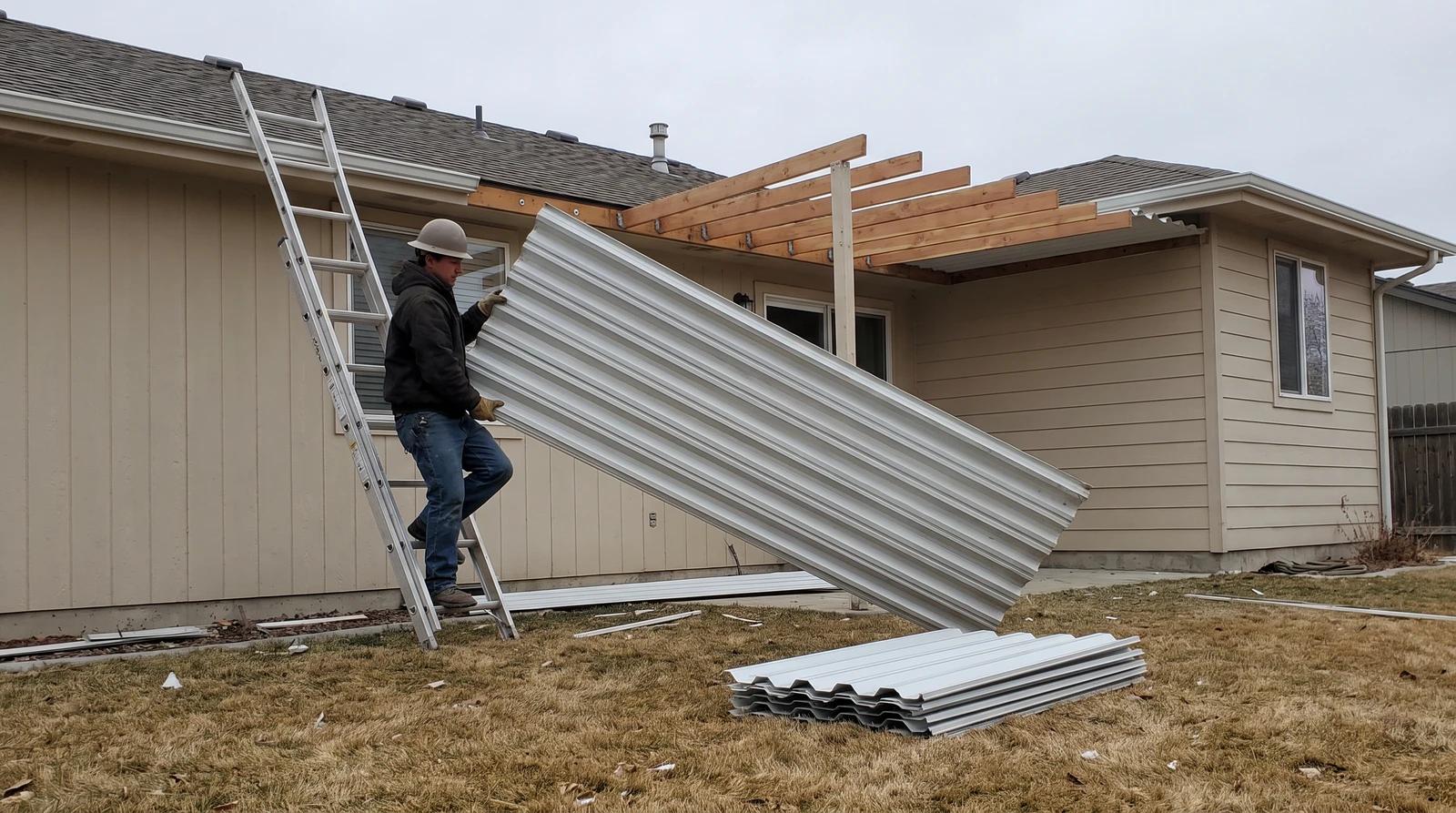
Most sunrooms and patio covers hang off a ledger board bolted to the side of the house. Some tie straight into the main roof, with flashing tucked up under the shingles.
Once that connection comes off, you've got bolt holes, a stripe of siding that faded differently than the rest, and sometimes a gap in the flashing. None of that adds much cost if it's planned for. It's a real problem, and a real cost, if it rains before anyone patches it.
So the careful part happens right where the old sunroom meets the house. That's hand work, and it's slower for a good reason. It's also where a big share of the labor cost sits.
Doors and windows from the house into the sunroom stay put, so the removal has to leave them sealed and working.
What's it made of, and why does that matter?
Knowing the materials helps, because each one comes out and gets disposed of a little differently, and each one moves the cost.
Start with the glass. Big tempered or double-pane panels in the windows and roof are heavy and awkward, and they need to come out whole instead of shattering across your lawn. Glass panels in decent shape can sometimes be donated rather than tossed, which can help the disposal cost.
Older patio covers, kit sunrooms and three-season sunrooms around the Treasure Valley are often framed in aluminum. That's good news for the cost, since aluminum recycles well and doesn't need to go to the landfill.
A stick-built sunroom with a shingled roof, insulation, drywall and real windows is another story. It comes apart more like a small room addition, and its pricing reflects that.
A four-season sunroom addition built for energy efficiency can have insulated glass and its own heating. That kind of room costs more to take down, and the pricing shows it.
Then there's wiring. Ceiling fans, outlets and lights are common out there, and those circuits have to be shut off and made safe before anything gets pulled. Live wiring adds a step to the project and to the cost.
Last is the slab under the sunroom. Some homeowners want the concrete gone, others keep it as an open patio, and that one choice changes the size of the job, and the cost, more than almost anything else.
Heads up: On older homes, original materials in a sunroom or enclosed porch, like vinyl flooring, siding or textured ceilings, may need asbestos testing before they're disturbed. Ask early. If testing is needed, it has to happen before demolition starts, not halfway through.
Do you need a permit or HOA approval?
Whether you need a permit depends on where you live and what's coming down. Boise, Meridian and Nampa each run their own building departments, and unincorporated parts of Ada and Canyon County go through the county.
An attached sunroom with wiring is more likely to need sign-off than a freestanding cover. The fastest way to find out is to call and describe exactly what's being removed, including the electrical and whether the roof gets touched.
If a permit is needed, Boise Demolition can handle the application for the demolition work. Any fees become part of the project cost.
Got an HOA? Check with them too. Plenty of newer subdivisions in Eagle, Star and Kuna have rules about how the back of a house looks, and the siding hiding behind a ledger board rarely matches.
What moves sunroom removal cost in Boise
We don't quote these by the hour or off a number on a website, because no two sunrooms are alike. Pricing comes down to the space and the work involved.
That's why sunroom costs swing so much from house to house. An online cost calculator can ballpark what a new sunroom costs to build, but it can't see how yours is attached or what roof and glass it has. Removal pricing depends on what's really there.
| What we look at | Keeps the cost lower | Pushes the cost higher |
|---|---|---|
| Size | A small cover with a few square feet of roof | A big room with a lot of square footage |
| Roof | Light aluminum or plastic panels | Shingles tied into the main roof |
| Walls | Open sides or screens | Insulated walls, windows and glass panels |
Size and weight come first, and they set the baseline for pricing. A light aluminum cover is a much smaller job than an enclosed, insulated sunroom with a real roof.
How it's attached matters, too. A cover bolted to a ledger comes off more simply than a room addition tied into the main roof, and that alone moves the pricing.
Site conditions and access
Access is a big one, and so are other site conditions like slopes and fences close to the walls. If glass, framing and debris can go straight out a side gate, great. Tight side yards in the North End or older parts of Garden City mean more carrying, and more labor cost, than a wide-open lot out in Caldwell.
What sits underneath: an existing patio or an existing deck
The slab is the biggest swing in the project. Keeping it keeps the job smaller and the cost lower, while breaking it out and hauling it adds a lot of weight and labor.
Some sunrooms sit on an existing patio that can stay. Others sit on an existing deck, and whether it stays or goes changes the cost.
Decks under old enclosures can hide rot. That's a structural question, and a separate cost, to settle before anyone walks on them.
Disposal plays into pricing too. Glass, aluminum, wood and mixed debris all go different places, so everything from the removal, construction waste and all, gets sorted: what can be recycled or donated is set aside and the rest heads to the landfill.
Timing and weather
How long a sunroom removal project takes depends on the same things that drive pricing: size, attachment, permits and weather.
Summer works, but glass and aluminum panels get hot to handle on an Idaho afternoon, so early starts help. Winter's doable if the exposed wall gets sealed before snow or a freeze-thaw cycle gets into it. Spring and fall are usually the easiest weather for it.
Does doing it yourself lower sunroom pricing?
A small freestanding pergola? Maybe, if you're handy and have a way to haul it off. An attached sunroom means heavy glass, live circuits and ladder work right next to your own roof.
Doing it yourself can trim the labor cost, but disposal still costs something, and a fall or a cracked glass panel can cost far more. Most of what you pay for in sunroom pricing is careful work at the house wall.
The best reason to hire a demolition service is protecting the house that's staying behind. Sunroom tear-outs are part of our Residential Demolition Services for homeowners.
Quick tip: If you're just starting to think it over, figure out three things: what it's made of, how it's attached, and whether the slab stays. Those answers shape nearly everything else, including the cost of the project.
Want a second set of eyes on it? Boise Demolition does free on-site estimates around Boise, Meridian, Nampa and the rest of the Treasure Valley, with a firm price before anything gets touched. Give us a call at (208) 296-6153 when you're ready.
Frequently asked questions
How much does a 16x20 sunroom cost to remove?
There's no honest single number for it. A 16x20 sunroom with a glass roof, walls of windows and a slab coming out costs far more to remove than a light aluminum frame on a slab that stays, so an on-site look is the fastest way to a real price. The same goes for a 12x12 sunroom: its square footage matters less than the roof, the glass and windows, and what sits under it.
How do I close one off without tearing it out?
If you just don't want to heat or cool it, keep the door to the house shut and treat it as a three-season space. Walling it off for good is a remodeling project, not a demolition one.
Do sunrooms add value to a house?
It depends on the room. A well-built sunroom with good natural light can work like a second family room, while a drafty one that drives up energy bills may not add much. A local real estate agent can help you weigh repair cost against tear-out cost.
What should a removal estimate include?
Related reading: Residential Demolition Specifications: What a House Teardown Spec Covers and Residential Demolition Notes: What They Say and Why They Matter.
Ask what the removal pricing covers: tear-down, making the wiring safe, hauling, disposal and the slab. Two sunroom removal quotes only compare fairly when they cost out the same project.
Planning a Demolition Project?
We handle permits as part of our demolition services throughout Boise, Meridian, Nampa, and the Treasure Valley. Call for a free estimate.
Call (208) 296-6153More From Our Blog
Demolition Labor Cost per Hour vs. Total Demolition Cost on a Teardown
Demolition labor cost per hour tells you little about a teardown. Learn what really drives house demolition costs and why crews price by the job.
Demolishing a Garage: How It Comes Down, Slab and All
Demolishing a garage, step by step: utilities and permits, attached vs. detached, block walls, slab removal and when an old roof needs asbestos testing.
Do I Need a Permit for Building Demolition? Who Handles What
Do I need a permit for building demolition? Usually, yes. Here's what comes before the application, who handles each step and what moves the cost.
