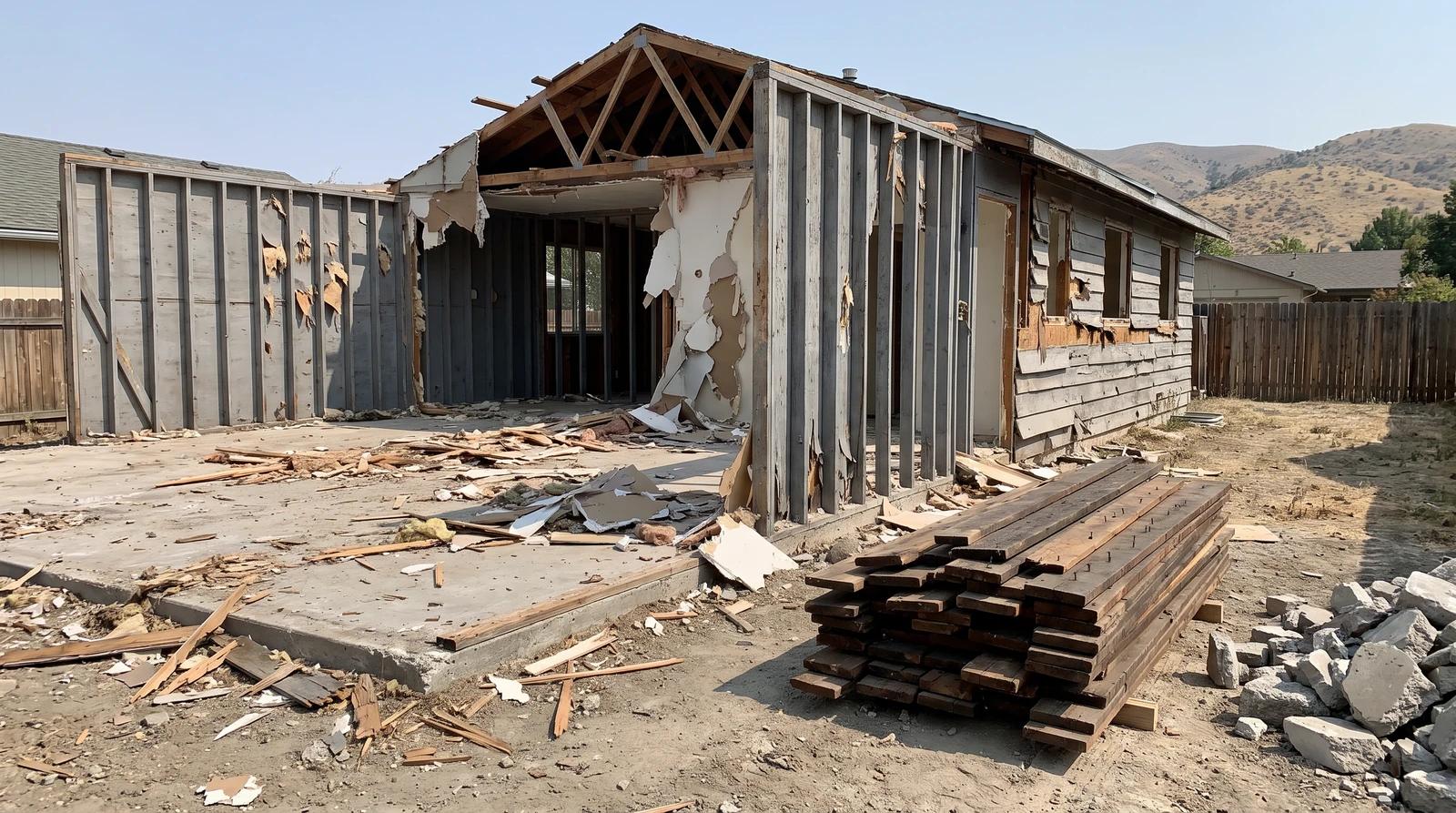
Do I Need a Permit for Building Demolition? Who Handles What
Yes, you need a permit for building demolition in most Treasure Valley cities before a house, garage or business comes down. The permit usually can't move until the asbestos check is done and the utilities are off. That's true in Boise, Meridian, Nampa, Caldwell, Eagle and the small towns around them.
The permit itself is rarely the hard part. The steps in front of it are what slow most jobs down.
Do I Need a Permit for Building Demolition?
You need one any time a whole house or a good-sized structure comes down. Demolition regulations change a bit from city to city. But the main idea is the same across the valley.
In most places, demolition permits are required before any work starts. Beginning your demolition project would be illegal until the permit is issued. Starting without a permit can lead to a stop-work order or a fine.
Why do authorities require demolition permits at all? Mostly for safety. Before anyone can demolish a building, the city wants proof the gas and power are off. It also wants the sewer capped.
The permit is how the city checks, ensuring the debris goes somewhere legal too. It also provides legal authorization for the work.
Some websites now offer an AI building permit checker. It may not know your lot or your local regulations. Whatever it says, the city's own permit requirements are the ones that count.
Whole houses and commercial jobs
Houses, duplexes, manufactured homes on a permanent foundation and nearly every business building need a permit. Commercial demolition carries more paperwork. Most of it covers asbestos and how the lot is left.
Commercial demolition services usually cover the whole building coming down, from the paperwork to the last load hauled off. A job like that means the whole structure comes down and the lot is left clear.
A house follows the same order: permit, utilities, teardown, then cleanup and removal.
Smaller structures: garages, carports, sheds and pools
On residential demolitions, smaller jobs are where the answer gets fuzzy. A detached garage usually needs a permit, mostly if power runs to it. A small shed on skids or blocks often doesn't. Each city sets its own size limit.
Pool removal usually means a permit plus an inspection of the fill. A poorly filled pool settles later.
| Job | Permit usually needed? | What to plan for |
|---|---|---|
| Whole house removal | Yes | Asbestos check, utility shutoffs, sewer cap |
| Detached garage removal | Usually | Power or gas running to it |
| Small shed removal | Often not | The city's size limit |
| In-ground pool removal | Usually | How the hole gets filled and checked |
| Deck or carport removal | It depends | Size, and whether it's attached |
Quick tip: If a structure has power, gas or water running to it, assume a demolition permit is required until the city says otherwise.
Who pulls the permit: the owner or the contractor
Are contractors responsible for pulling permits? On most demolition jobs the contractor files it, but it depends on the city. Boise Demolition handles the permit application on the jobs it takes.
In many cities, property owners can pull their own permits too. Most still let the contractor handle the permitting process. Only the owner can sign for the utility accounts, though.
What qualifications do you need for demolition?
You need a contractor who's licensed and insured and knows the permit process in your city. They also need the gear to tear things down and haul them off safely. Boise Demolition is a licensed and insured contractor, so check for that with anyone you hire.
Yes, we'd like the work. But these are worth asking any demolition company, whether it's a house or a shop:
- Proof of insurance that covers the crew and the work
- Who files for the permit, and whether that's in the price
- How they'll protect fences, trees, driveways and the neighbors' yards
- What their safety plan is for dust and people walking by
- That asbestos removal, if needed, goes to a separate qualified team
Tight lots, overhead power lines and shared fences all change how a teardown goes. Ask how they'd handle yours with safety in mind.
What Has to Happen Before a Demolition Permit Is Issued
Before the permit is issued, the building department usually wants three things. That's an asbestos inspection where one applies, proof the utilities are off, and a simple site plan.
Like most construction projects, it comes down to doing things in order. The inspection is the critical first step.
The permits required vary by city. But those three show up on almost any demolition project. Obtaining demolition permits is mostly paperwork once that prep is done. Securing the necessary permits goes faster when every piece is ready.
Asbestos inspection on older and commercial sites
Commercial buildings fall under federal asbestos rules that call for an inspection before demolition. Many cities want the report turned in with the permit paperwork. Older homes often get one too. Old siding, roofing and duct wrap can contain asbestos.
A certified asbestos inspector does that work, not the demolition crew. If the report finds asbestos, a qualified team removes it before the teardown starts. That step keeps the crew and the neighbors safe.
Utility disconnects and capping the sewer line
This part stays with the owner. You call the power, gas and water companies to shut service off and pull the meters. The city usually wants written proof from each one before it signs off.
The sewer line also has to be capped, usually at the property line. In many cities a licensed plumber does that and an inspector checks it. Boise Demolition will tell you what the city needs to see. But those calls have to come from you.
Heads up: The sewer cap is easy to forget. Book it along with the utility shutoffs. The whole permit can stall on that one inspection.
Site plan and what happens to the debris
Most cities ask for a basic demolition plan. That's a sketch of the lot, what comes down, what stays, and how the site will be left. Some also want to know where the waste is going and how dust will be kept down.
Boise Demolition puts this together as part of the paperwork. Debris gets sorted by type. Much of it gets recycled, like concrete and metal. Usable materials get donated when they can be.
The rest heads to a county landfill or transfer station, depending on where the job is.
How Much Does Demolition Usually Cost?
Demolition cost comes down to four things. That's the size of the job, what it's built from, how easy the site is to reach, and where the waste ends up. Boise Demolition prices by the space and the work involved. You get a firm price at a free on-site estimate before anything is touched.
Pricing for houses and bigger jobs works the same way.
Permit requirements and inspections
Permit fees vary by city and by the size of the project. The asbestos inspection is a separate cost. Asbestos removal adds more if anything turns up. Utility disconnects and the sewer cap are billed by whoever does them.
Filing for the permit is part of Boise Demolition's firm price.
Size, materials and access
Bigger jobs take more labor, more machine time and more loads. Brick, block and concrete weigh a lot more than wood framing. A basement or a thick slab adds real work.
Access matters too. A narrow North End lot with big trees takes more care than an open lot in Kuna or Star.
Frozen ground in winter and summer dust also change how a job runs.
Disposal, donation and recycling
Disposal is charged by weight or by the load. So heavy loads headed to the landfill cost more. Recycling concrete and metal and donating what's still usable keeps more out of the landfill.
Worth asking: On any demolition quote, ask if hauling, disposal and the permit filing are in the number or added later. With Boise Demolition they're part of the firm price, and there are no hidden fees.
Frequently asked questions
What are the three types of demolition?
Most people mean total demolition, where the whole thing comes down. Partial demolition takes out one piece, like a garage or pool. Implosion is for big towers, not house lots.
Can property owners pull their own permits?
In many cities, yes, property owners can pull their own permits. Anyone wishing to do that takes on every rule tied to it. So most people let the contractor file instead.
How long does the permit process take?
It depends on how complete your paperwork is, including the asbestos report. It also depends on how busy the local permit office is. It can take longer in busy stretches, when renovation projects and new builds pile up.
Does the permit cover hauling the debris away?
No. The permit provides legal authorization for the demolition itself. Hauling, recycling and donation are separate work. Boise Demolition includes them in the firm price.
Getting your teardown started
You'll need a permit in most Treasure Valley cities, but it's usually the easy piece. Start the asbestos inspection and utility shutoffs early, and the rest tends to follow.
Related reading: Commercial Asbestos Inspection Boise, Idaho: What Comes Before Demolition and What Happens During Demolition? How a Structure Comes Down, Step by Step.
If you need residential demolition services or a commercial teardown anywhere in the Treasure Valley, call Boise Demolition at (208) 296-6153. We'll come look at the site, tell you what your local permit office will want, and give you a firm price. No pressure either way.
Planning a Demolition Project?
We handle permits as part of our demolition services throughout Boise, Meridian, Nampa, and the Treasure Valley. Call for a free estimate.
Call (208) 296-6153More From Our Blog
Demolition Labor Cost per Hour vs. Total Demolition Cost on a Teardown
Demolition labor cost per hour tells you little about a teardown. Learn what really drives house demolition costs and why crews price by the job.
Demolishing a Garage: How It Comes Down, Slab and All
Demolishing a garage, step by step: utilities and permits, attached vs. detached, block walls, slab removal and when an old roof needs asbestos testing.
Residential Demolition Plan: What Goes Into One Before a House Comes Down
A residential demolition plan covers utilities, hazardous materials testing, the teardown order, debris and site protection. Here's what goes in one.
