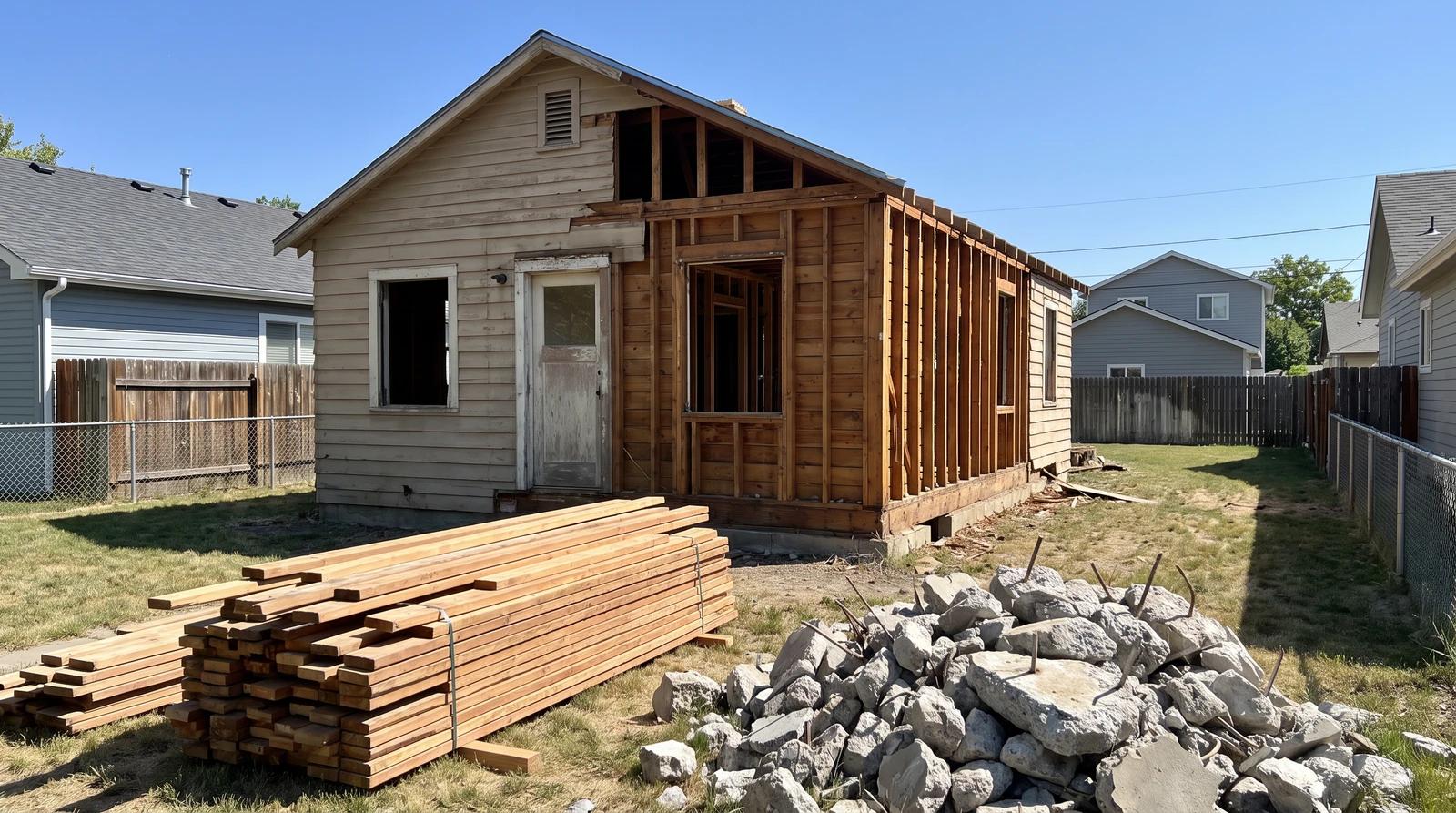
Residential Demolition Costs: What Really Sets the Price on a Teardown
Residential demolition costs come down to what's coming down, what it's built from, how easy it is to reach, what's under it and where the debris goes. That's why one per-square-foot number rarely matches what you'll pay.
Take a slab ranch on an open lot in Kuna. Then take an older two-story with a basement, squeezed between neighbors in Boise's North End. Both are a house teardown, but they aren't the same job. This guide walks through what sets the cost of a Treasure Valley demolition, from a crew that does its estimates in person.
How much does residential demolition cost?
It depends on six things more than anything else: size, materials, the foundation, access, the paperwork and disposal. Each one can move the number up or down on its own.
It's also why contractor prices vary so much. A cost estimate that skips one of these isn't pricing the same demolition project.
Most projects follow the same basic process: testing, permits, utility shutoffs, the demolition itself, then hauling and grading. How long each step takes on your lot shapes the bill.
Size and number of stories
More square feet means more debris, more labor and more loads to haul.
A cost per square foot measures floor area, not height or weight.
A second story adds height. Taking down a taller house near a fence or a neighbor takes more care and more time.
Attached garages, porches, carports, decks and sheds add to the job too. Count everything that's coming down, not just the sq ft of living space.
What it's built from: wood frame, brick, block or concrete
Most residential structures in the Treasure Valley are wood frame. Wood comes apart fairly fast, and a lot of it can be recycled.
Brick, block and concrete are heavy. Weight drives both the number of loads and the disposal bill. Older homes often hide plaster walls, layers of old roofing or a brick chimney. That's weight you don't see from the curb.
Demolishing brick or block also takes more time per square foot than wood framing.
Most residential structures mix materials, too. Wood framing behind a brick veneer means demolishing and sorting two kinds of debris.
What's underneath: slab, crawlspace or basement
- Slab: the slab gets broken up and hauled, which means heavy loads.
- Crawlspace: stem walls and footings come out, and the ground gets leveled.
- Basement: the walls and floor come out. Then the hole is filled and packed down for whatever comes next.
A full basement can be one of the biggest jumps in teardown costs. A pool works the same way. Filling one in and taking it out completely are very different jobs.
Heads up: Frozen ground in a Boise winter can slow down foundation removal and backfill. If there's a basement to fill, ask how the season affects timing before you set a build date.
Access and nearby structures
A wide-open lot in Star or out in Canyon County lets equipment move freely.
Infill lots are tighter. Older neighborhoods on the Bench and in the North End often have narrow side yards, big trees, power lines and houses close on both sides.
That can mean smaller machines and more work by hand near the lot lines. Hand work takes longer, and that pushes labor costs up.
Asbestos testing, utility disconnects and permits
This is the paperwork side, and it's where demolition jobs tend to stall.
Homes built before the 1980s can have asbestos in siding, roofing, flooring, ceiling texture or pipe wrap. An accredited inspector tests the building first. If asbestos turns up, it has to be properly removed before the demolition crew starts. That removal is its own cost.
Power, gas, water and sewer all need to be shut off and capped. The power and gas companies set those disconnects on their own timelines. The sewer cap often needs an inspection.
Then there's the demolition permit from your city or county. Boise Demolition handles the permit application for you. The city still wants the asbestos survey and disconnects done first, so start early.
Disposal: what gets donated or recycled and what goes to the landfill
Disposal is where a lot of the real cost lives. Landfills like Ada County's charge disposal fees, and heavy, mixed debris usually costs more to get rid of.
The good news? Much of a house doesn't have to go there. Clean lumber, metal and rubble can often be sorted on site and recycled. Usable doors, cabinets and fixtures can be donated before demolition starts.
Good to know: The more that gets sorted on site, the less ends up as mixed landfill debris. Sorting takes some effort, but it's one of the few factors that can work in your favor.
Why an average cost calculator can't see your lot
An online calculator gives you an average cost per square foot based on other people's houses. It can't see your lot, so it skips most of what we just covered.
It doesn't know about your basement, the asbestos in your siding, the power line over the driveway or the neighbor's garage a few feet away. Those are the things that change the bid.
The most useful number you can get is a firm quote from someone standing on the lot, before anything is touched. It should be priced by the space and the work, with no hidden fees, so you can set a budget around it.
Worth asking: Does the quote include foundation removal, backfill, the permit and disposal? A low number that leaves out the basement or the dump fees isn't really low.
Is deconstruction cheaper than demolition?
Usually not on labor. Taking a building apart piece by piece takes more hands and more time than tearing it down with a machine.
Where it can help is on the back end. Less weight goes to the landfill, and some materials can be reused. Donated materials may also have tax benefits, but that's a question for your tax pro, not your demolition contractor.
For most homes, the answer sits in the middle. Pull out what's worth saving first. Then tear down the rest and recycle what you can.
What is the cheapest way to demolish a house?
The cheapest way to demolish a home is to remove the surprises. Most of what drives costs up is stuff nobody planned for, so a little prep goes a long way.
Get the paperwork and testing done early
Order the asbestos survey and call the utility companies as soon as you decide to tear down. Have test results in hand before you get quotes, so every contractor is pricing the same job.
Spring and summer are busy building seasons around here. Permits and utility disconnects can take longer then. Starting early gives your demolition project room for those delays.
Clear out belongings and anything worth keeping first
Anything left inside becomes debris once demolition starts, and mixed debris is the most costly kind to haul. Take out furniture and anything you want to keep or sell before demolition day.
If there are items you'd like donated, say so during the estimate so they can be set aside.
Decide what happens to the foundation and driveway
Talk to your builder before you book the demolition. Some rebuild plans need every bit of concrete gone. Others can keep a driveway for construction access.
Knowing this upfront keeps you from paying to remove a slab you needed, or paying twice to come back for it later.
Residential demolition costs FAQ
Is it worth demolishing a house and rebuilding it?
It can be, especially when the house has major structural, layout or foundation problems that would cost a lot to fix. Compare the full cost of teardown plus rebuild against a remodel, with firm numbers on both.
What are the three types of demolition?
Total demolition takes the whole structure down. Selective demolition removes only part of it, like a garage or a deck. Deconstruction takes a building apart by hand so parts can be reused.
How long does a demolition take?
It depends on the size, the foundation, access and how fast permits and utility disconnects come through. On most projects, the demolition itself is the quick part. The paperwork usually sets the schedule.
What must be in place before demolition?
You need the demolition permit, any required asbestos testing and removal, and all utilities shut off and capped. Belongings should be cleared out, and you should know what's happening with the foundation.
Getting a real number on your house teardown
A per-square-foot figure is a starting point at best. The real number comes from your lot: what's built there, what's under it, how easy it is to reach and how much can be recycled instead of landfilled.
The Residential Demolition Services page covers what the service includes and how the estimate works.
Related reading: Residential Demolition Specifications: What a House Teardown Spec Covers and Residential Demolition Notes: What They Say and Why They Matter.
Related reading: Residential Demolition Specifications: What a House Teardown Spec Covers and Residential Demolition Notes: What They Say and Why They Matter.
Got a house, garage or shed coming down anywhere in the Treasure Valley, from Eagle and Meridian to Nampa and Caldwell? Our house demolition service starts with a free on-site estimate and a firm quote. Give Boise Demolition a call at (208) 296-6153 when you're ready to talk it through.
Planning a Demolition Project?
We handle permits as part of our demolition services throughout Boise, Meridian, Nampa, and the Treasure Valley. Call for a free estimate.
Call (208) 296-6153More From Our Blog
Demolition Labor Cost per Hour vs. Total Demolition Cost on a Teardown
Demolition labor cost per hour tells you little about a teardown. Learn what really drives house demolition costs and why crews price by the job.
Demolishing a Garage: How It Comes Down, Slab and All
Demolishing a garage, step by step: utilities and permits, attached vs. detached, block walls, slab removal and when an old roof needs asbestos testing.
Do I Need a Permit for Building Demolition? Who Handles What
Do I need a permit for building demolition? Usually, yes. Here's what comes before the application, who handles each step and what moves the cost.
