Demolition Projects: Types, Methods and What Moves the Cost
Most residential demolition projects fall into a few types: whole houses, garages and sheds, decks and carports, pools and hot tubs, and concrete. Each one is priced by its size, what it's built from, how easy it is to reach and where the debris has to go.
Below is what each type involves, the methods crews use and what sets a firm price.
What types of demolition projects are there?
They're easiest to sort by the structure coming down. It tells you how big the crew is, whether a machine fits and how much debris there'll be.
Whole houses
A whole house is the biggest job most homeowners ever book. It usually means a permit, utility disconnects and an asbestos check on older homes. The foundation and footings come out too, unless you're keeping them for a rebuild.
Teardowns come up a lot in older Boise neighborhoods, where people love the lot but not the house on it. Agree up front on who handles the permit and the utility shutoffs.
Garages, sheds and carports
Detached garages and sheds are smaller, but they still have parts that change the work. Is there a slab? Power run to it? Several layers of shingles on the roof?
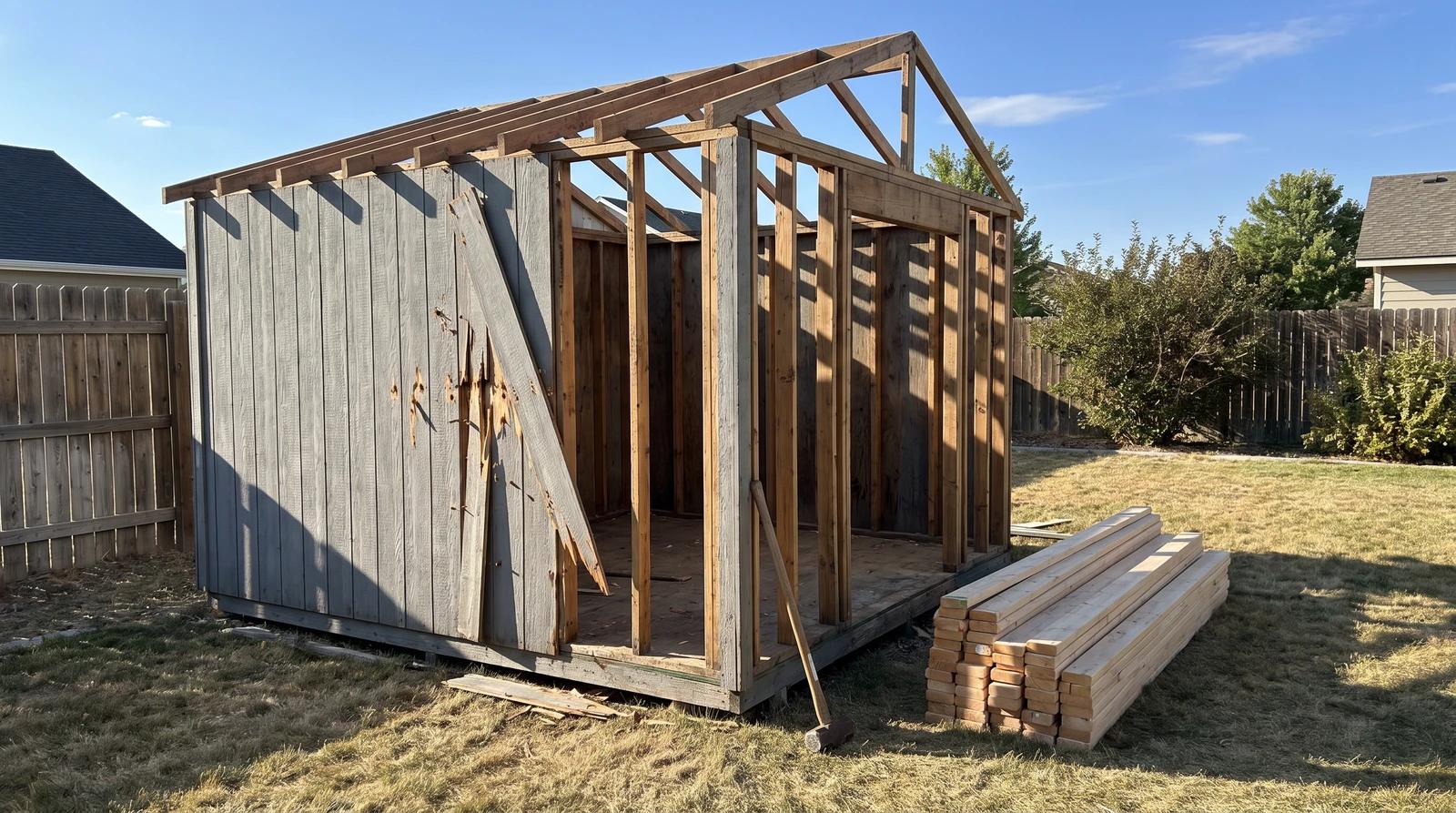
A lot of sheds on older lots sit on skids or blocks and come apart quickly. A garage with a poured slab and wiring is a bigger project. Carports are usually the lightest of the three. Metal ones need cutting, though, and the posts are often set in concrete.
Decks and patio covers
Decks look simple until you get underneath. The boards come up easily. The posts, footings and the ledger board bolted to the house take more care.
Patio covers that tie into the roofline need the same care, so the house isn't damaged when they come off. Composite decking also can't be reused the way some solid wood can, which changes where it goes.
Pools and hot tubs
A hot tub is mostly a weight and access problem. It has to be drained and disconnected by an electrician if it's hardwired. Then it gets cut up or moved out through whatever gate or path you have.
An inground pool is a real excavation job. The shell gets broken up, the hole is filled and packed down in layers, and the ground is left ready for lawn, a patio or a future build.
Concrete slabs, driveways and patios
Concrete is heavy, and weight drives the job. Thickness, rebar or wire mesh, and how far the debris has to travel to the truck all matter.
What are the different types of demolition methods?
The three demolition methods homeowners run into are machine demolition, hand demolition and deconstruction. Most projects use a mix.
Using a machine
An excavator or skid steer does the heavy lifting. It's the fastest way to take down large structures like whole houses, slabs and pools. It just needs room to get in and space to load out.
The tradeoff is that machines don't sort well. Recycling takes extra work on the ground.
By hand
Hand demolition is a crew with pry bars, saws and sledgehammers. It's the right call when a machine can't fit, like a backyard shed behind a narrow fence. It also fits when the structure sits close to something you're keeping.
It's slower and takes more labor, but it's precise.
Is deconstruction the same as demolition?
No. Deconstruction takes a building apart piece by piece so the materials can be reused. Demolition brings it down and hauls it away.
With deconstruction, pieces come off in order, get sorted on site and head to donation or recycling. In return for the extra time, good lumber, doors, windows, fixtures, metal and brick stay out of the landfill.
So what's worth saving? Solid framing lumber from older houses, wood doors, steel, aluminum and copper are good candidates. Rotted wood, old insulation and broken drywall are not.
Boise Demolition donates or recycles much of what it hauls. If saving materials matters to you, mention it at the estimate so the plan accounts for it. Not all contractors sort for reuse, so when you compare them, ask where the lumber and metal end up.
How much does demolition cost?
Demolition cost comes down to four things: size and materials, site access, disposal, and permits and utilities. There's no honest number for a job nobody has seen.
Boise Demolition gives a free on-site estimate and a firm price before anything is touched. Pricing is based on the space and the work involved, with no hidden fees.
Size and what the structure is made of
Bigger means more labor and more debris. Materials matter just as much. Concrete and brick are heavy, and plaster weighs more than drywall. Extra roof layers add weight and bulk.
Access to the site
Can a machine get in? A garage off a wide driveway near Meridian's Ten Mile corridor is a very different job from a shed behind a tight side gate on the Bench. Slopes, overhead power lines and landscaping you want protected all slow things down.
Season plays a part too. Frozen ground in winter makes digging and backfill harder. Hot, dry summers mean more water for dust control.
Disposal, donation and recycling
Where debris goes changes the cost. Mixed debris goes to the landfill, which charges a disposal fee. Sorted materials often have a better place to go.
| Material | Where it usually goes |
|---|---|
| Clean concrete | Crushed and recycled |
| Steel, aluminum, copper | Scrap recycling |
| Good lumber, doors, windows, fixtures | Donation or reuse |
| Mixed debris, insulation, rotted wood | Landfill |
Permits and utility disconnects
Most Treasure Valley cities want a demolition permit before a house or other building comes down. Rules vary by city and by the size of the structure, so demolition contractors serving all of the Treasure Valley check each one. Check before you assume a small shed is exempt. Boise Demolition can handle the permit application for you.
Power, gas and water have to be shut off and disconnected at the source, and sewer lines capped, before work starts. The utilities schedule those visits themselves. Their timing often sets the start date.
Older buildings may also need an asbestos inspection first, because EPA rules control how asbestos is handled and disposed of. If any turns up, a licensed abatement contractor removes it before demolition starts.
Heads up: A professional crew asks about asbestos on an older house before it quotes, not after the walls are open.
Who you hire
Who runs the job changes how it's planned. Many homeowners call a builder first, since they'll run the whole rebuild. Some general contractors do their own teardown, and many hire it out to demolition contractors.
| Who you hire | When it tends to fit |
|---|---|
| General contractors | A teardown with a new build right after |
| Demolition contractors | A shed, deck, pool or slab with nothing new planned |
| Abatement contractors | Asbestos found in an older home, before demo starts |
Whether you pick general contractors or demolition contractors, ask the same things. Are they licensed and insured? Who handles the permit? Where does the debris go? Is the price firm once they've seen the site?
Efficient demolition services come down to planning: the right crew, the right machine and a place for every load of debris.
Worth asking: On projects where a builder hires out the teardown, ask who files the permit.
Frequently asked questions
What is a demolition job called?
Most people call it a demolition or demo job. A whole house coming down is often called a teardown. Careful takedown for reuse is called deconstruction.
What does demolition work include?
It includes taking the structure down, hauling the debris, sorting what can be donated or recycled, and leaving the site clean. Depending on the job, it can also mean removing slabs and footings or filling an old pool.
What's the first step?
Get the structure looked at in person so you know the scope and the price. Permits, utility disconnects and any asbestos check come next, before anything comes down.
Who handles this kind of job near me?
Boise Demolition is a locally owned, family-run, licensed and insured crew. It's serving all of the Treasure Valley, from Boise, Eagle and Star to Nampa and Caldwell. The work is exterior and whole-structure demolition: houses, garages, sheds, decks, carports, pools, hot tubs and concrete.
Getting started
Every demolition job gets easier when the plan comes first. Know what's coming down, what it's made of, how the crew gets in and where the debris goes.
The Residential Demolition Services page covers what the service includes and how the estimate works.
Related reading: Residential Demolition Specifications: What a House Teardown Spec Covers and Residential Demolition Notes: What They Say and Why They Matter.
Related reading: Residential Demolition Specifications: What a House Teardown Spec Covers and Residential Demolition Notes: What They Say and Why They Matter.
A free on-site estimate is worth having even if you're just pricing things out. Same-day service is there when the schedule allows, and you can pay by cash, card or Venmo. Give Boise Demolition a call at (208) 296-6153.
Planning a Demolition Project?
We handle permits as part of our demolition services throughout Boise, Meridian, Nampa, and the Treasure Valley. Call for a free estimate.
Call (208) 296-6153More From Our Blog
Demolition Labor Cost per Hour vs. Total Demolition Cost on a Teardown
Demolition labor cost per hour tells you little about a teardown. Learn what really drives house demolition costs and why crews price by the job.
Demolishing a Garage: How It Comes Down, Slab and All
Demolishing a garage, step by step: utilities and permits, attached vs. detached, block walls, slab removal and when an old roof needs asbestos testing.
Do I Need a Permit for Building Demolition? Who Handles What
Do I need a permit for building demolition? Usually, yes. Here's what comes before the application, who handles each step and what moves the cost.
