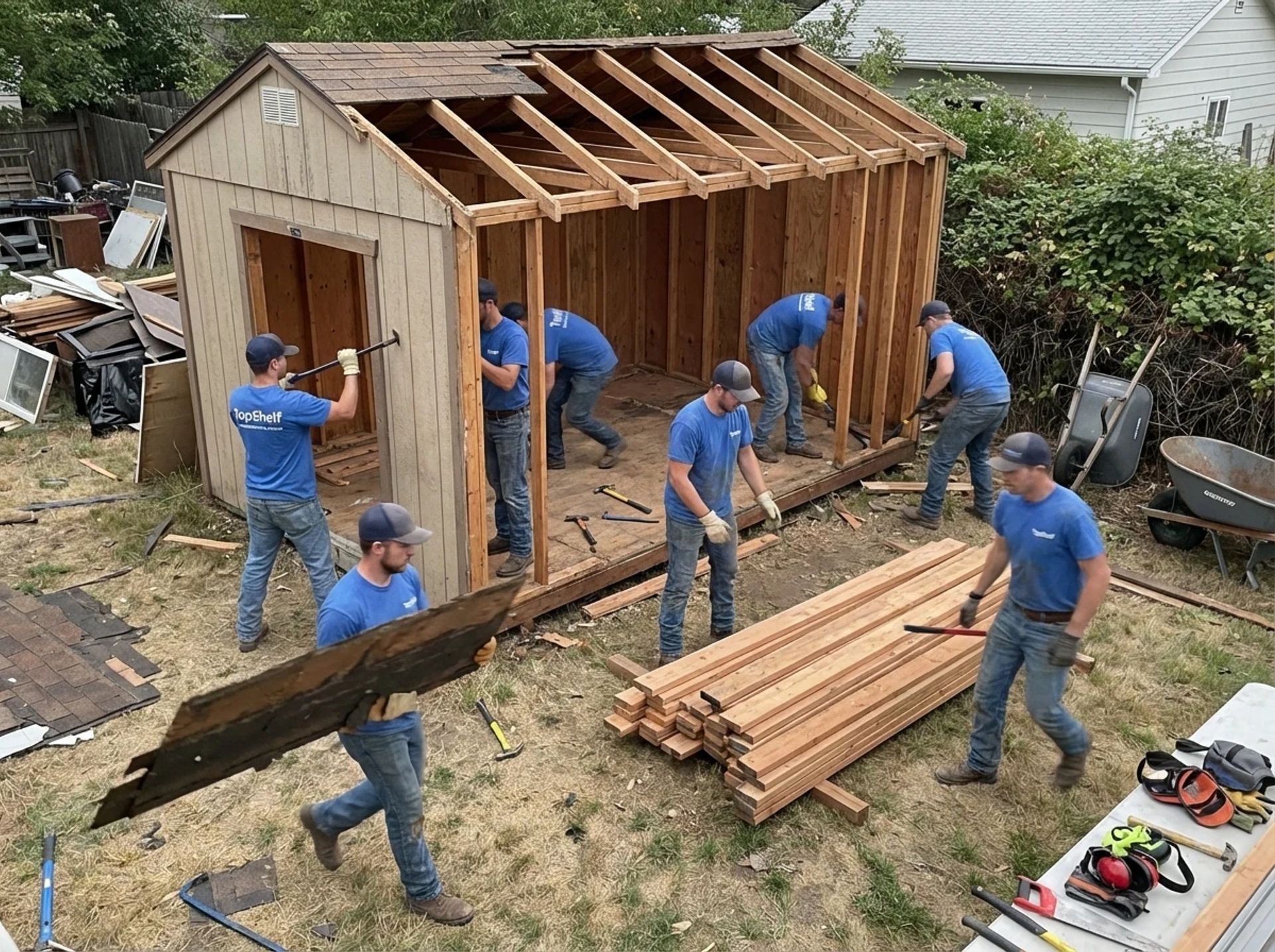
What Actually Happens During a Demolition Project?
If you've never had anything demolished, the process might seem like a mystery. Trucks show up, things get loud, and suddenly there's a pile of rubble where a building used to be.
But there's a lot more to it than just knocking things down. Professional demolition follows a specific sequence that keeps everyone safe and ensures the job is done right.
Here's what actually happens when you hire a demolition crew for your Boise area project.
Phase 1: Assessment and Planning
Before anything gets torn down, we need to understand exactly what we're dealing with.
Site visit and evaluation. We walk through the property to assess the structure, note access points for equipment, identify potential hazards, and understand the scope of work.
Age and material assessment. Older Boise buildings (pre-1985) require asbestos testing. We also identify construction types—wood frame, concrete, masonry—which affects equipment needs and timeline.
Permit requirements. Based on the project type and location, we determine what permits are needed from the City of Boise, Ada County, or other jurisdictions.
Develop a demolition plan. This outlines the sequence of work, safety protocols, equipment needed, and debris handling. Larger or more complex projects require more detailed planning.
Phase 2: Pre-Demolition Preparation
A lot happens before the first wall comes down.
Utility disconnection. All utilities—electricity, gas, water, sewer—must be properly disconnected. Not just turned off at the breaker, but disconnected at the source by the utility companies. This is a safety requirement and part of the permit process.
Hazardous material abatement. If asbestos, lead paint, or other hazardous materials were found during assessment, licensed abatement contractors remove them before general demolition. This is required by law and protects everyone's health.
Soft strip (if needed). For some projects, we remove salvageable items first—fixtures, doors, windows, copper piping. This is called soft stripping and can reduce costs if materials have value.
Site preparation. We set up barriers, ensure safe access for equipment, and take steps to control dust and debris. Neighbors may be notified depending on the project size and location.
Phase 3: The Actual Demolition
This is what most people picture when they think of demolition. But even this "destruction" phase follows careful procedures.
Demolition sequence. We don't just start swinging. The structure is taken apart in a planned sequence that maintains stability and safety throughout. Typically this means working from top to bottom and from weakest to strongest elements.
Equipment used. Depending on the project, we might use excavators with demolition attachments, skid steers, hand tools, or a combination. Smaller residential jobs often use smaller equipment to minimize site impact.
Dust control. Water is often applied to materials during demolition to control dust. This is especially important in residential areas and is sometimes required by permit.
Material separation. As we work, we separate materials when possible. Concrete, metal, wood, and other materials may go to different destinations based on recycling options and disposal requirements.
How Long Does Each Phase Take?
For a typical Boise residential demolition (house, garage, outbuilding):
The demolition itself is usually the quickest part. Most of the time goes to preparation and coordination.
Phase 4: Debris Removal and Cleanup
The building's down—now what? A lot of material needs to go somewhere.
Loading debris. Demolition debris is loaded into trucks for transport. For larger projects, we may have roll-off containers on site throughout the demolition.
Hauling to appropriate facilities. Different materials go different places. Concrete might go to a recycling facility. Mixed debris goes to appropriate transfer stations or landfills. We handle disposal according to Ada County and Idaho regulations.
Site grading. Once debris is removed, we typically grade the site to leave it level and clean. The extent depends on your plans for the property.
Final inspection. Many demolition permits require a final inspection. We coordinate with inspectors to close out permits properly.
What You See vs. What's Actually Happening
From the outside, demolition day looks chaotic. But there's method to what might look like madness:
Equipment positioning isn't random. Where we put machines matters for safety, efficiency, and protecting surrounding property. Operators are constantly aware of swing radius, load limits, and escape routes.
Workers aren't just standing around. Team members have specific roles—spotters watching for hazards, people managing debris flow, others preparing areas for the next phase.
Pauses are intentional. Sometimes we stop to reassess as conditions change. A wall might not fall as expected, or we might find something that requires attention before continuing.
The noise has patterns. Different sounds indicate different activities. Experienced crews work in rhythms that maximize efficiency while maintaining safety.
The Bottom Line
Demolition involves more planning and coordination than most people realize. The actual knocking-down is just one part of a larger process that includes assessment, permits, safety preparation, and proper cleanup.
When you hire a professional demolition contractor in Boise, you're paying for all of it—the expertise to plan properly, the equipment to work efficiently, and the knowledge to handle whatever comes up.
That's what separates professional demolition from just breaking things. The end result might look the same—an empty lot—but the path to get there matters.
Have Questions About Your Project?
We're happy to walk you through what to expect for your specific demolition project in Boise, Meridian, Nampa, or anywhere in the Treasure Valley. Call for a free estimate.
Call (208) 296-6153