When Is a Demolition Permit Required? A Structure-by-Structure Look
The short answer to when is a demolition permit required: almost any time a whole house or garage comes down. Smaller sheds, carports and decks can need one once their size, a slab or a utility line comes into it.
Across Boise and the rest of the Treasure Valley, the pattern is simple. The more of a building's structure you remove, and the more it's tied to the ground or the utilities, the more likely the local office wants to sign off first.
Most projects fall somewhere in between. Here's how it works for each kind of job.
When is a demolition permit required? Structure by structure
A demolition permit is required when something is big enough, attached enough or tied in enough that the city wants proof it came down safely. Most types of demolition on a residential lot fall into one of three groups.
Houses and garages coming down
If you plan to demolish an entire house, plan on filing for one first. Full building takedowns are the clearest case there is.
Detached garages usually land in the same bucket. They sit on a slab, they often have power, and they show up on county records as part of the property.
Before it signs off on a whole-house removal, the building department usually wants to see:
- Proof the power, gas, water and sewer are shut off and capped
- An asbestos check, where one is needed
- A site plan showing what comes out and what stays
- How the debris leaves and where it goes
Good to know: Tearing down a house to rebuild usually means two separate applications. The first covers the teardown. Building permits are required for the new home on their own.
Whole commercial buildings follow the same logic, and they can get a closer review.
Sheds, carports and decks
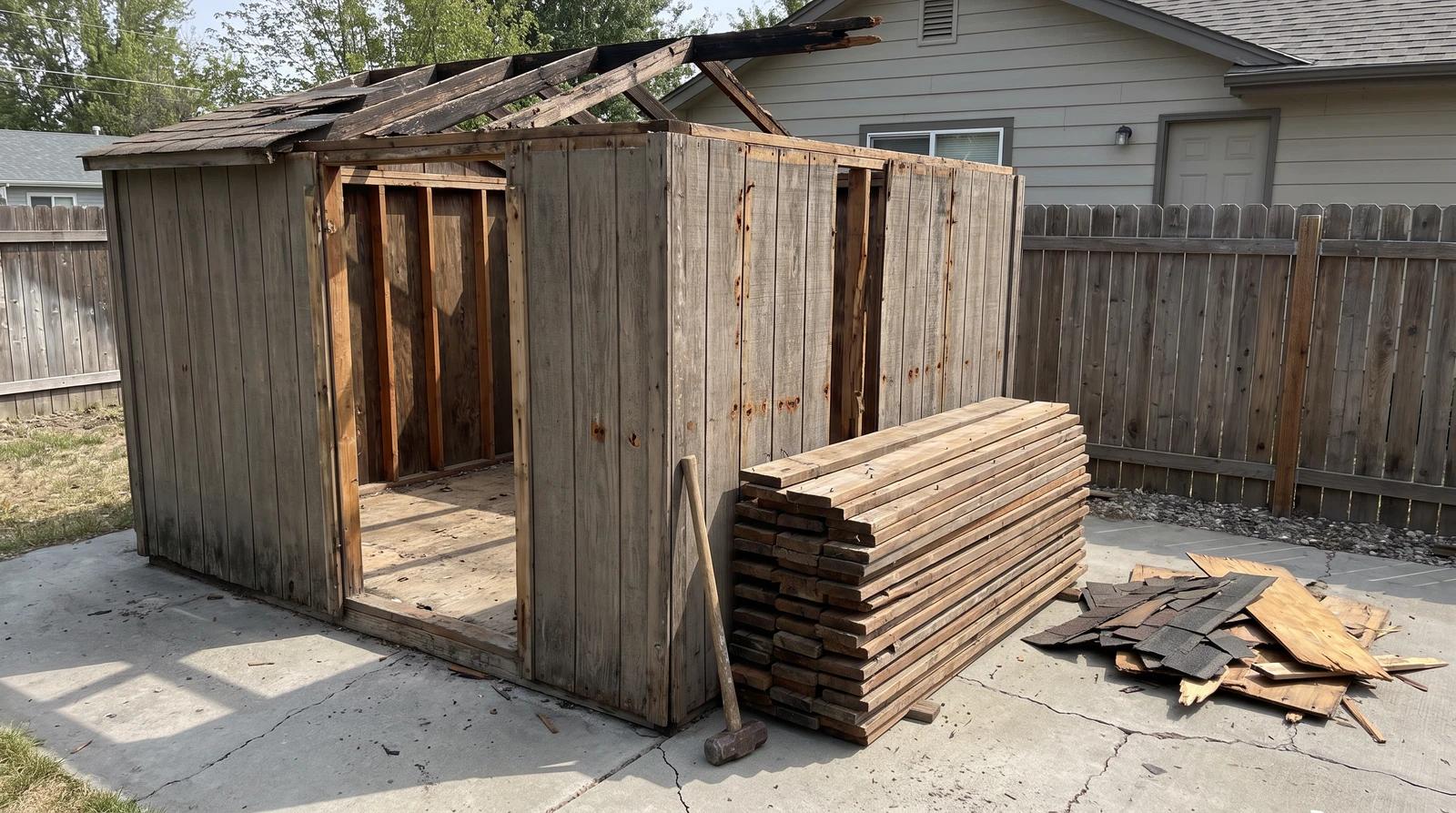
Smaller sheds and carports are where property owners get tripped up. So does a little garden shed on skids need one? Often, no. It's usually under the size cutoff for small add-ons like that.
Change one detail, though, and the answer can flip. Here's what usually tips it:
- Size. Each local office sets its own cutoff. A bigger shed or a double carport can cross it.
- A foundation. A shed or carport on a poured slab or footings gets treated more like a building than yard furniture.
- A utility line. If a wire runs to it, someone has to disconnect it the right way. That part can need its own sign-off.
- Attachment. A deck or carport bolted to the main dwelling is part of the house. Taking it off touches the house itself.
Older lots in the North End and on the Bench often have sheds and carports added long ago. Some still have a run of wire nobody remembers.
Pools, hot tubs and concrete
In-ground pool removal almost always needs sign-off. It means excavation, plumbing lines, power to the pump and a big hole. That hole has to be filled and packed down so the yard doesn't settle later.
Hot tubs are usually simpler. A portable tub is often just a removal job. But the circuit feeding it still has to be shut off and made safe.
Concrete depends on where it sits. Breaking out a backyard patio often needs nothing. A driveway that ties into the sidewalk or curb can need approval from whoever manages the street.
Heads up: Before any digging, buried utilities have to be marked. That's the 811 call. Skipping it is how people find a gas or power line under an old slab the hard way.
What are the three types of demolition?
The three types are total demolition, partial demolition and deconstruction. Which one fits your job changes what the paperwork has to cover.
Total demolition: the whole structure and its foundation
Total demolition takes everything: roof, walls, framing and the slab or foundation underneath. It's the usual choice when an entire house or garage is coming down to make room for something new.
Because it takes the lot down to dirt, it carries the fullest permit requirements.
Total demolition isn't the same as land clearing, though. That means pulling trees, brush and stumps, and it can fall under different local rules, especially on a commercial lot. If your job includes that work too, ask the city whether that part needs its own review.
Partial demolition: taking off a garage, carport or deck and leaving the house
Partial demolition removes one attached piece and leaves the rest of the house standing. Think of a sagging attached carport, a deck that's past saving, or an attached garage coming off.
These jobs can require permits even though the house stays. The removal affects the wall it was attached to. That wall may need to be closed up and weathertight once the crew is done.
Worth asking: Who closes up the wall after an attached piece comes off? Settle that before work starts. You don't want an open wall in a freezing Boise winter.
Deconstruction: taking it apart for donation and recycling
Deconstruction is slower and more careful. Instead of knocking it down, the crew takes it apart so usable pieces can go somewhere besides the landfill.
At Boise Demolition, a lot of what comes off a job is donated or recycled. Clean lumber, metal, doors and windows can often get a second life. Broken concrete can be recycled instead of buried. What's left heads to the county landfill or the right drop-off for that material.
How long does approval take for a demolition project?
It depends mostly on how ready the permit application is when it goes in. A complete one for a garage usually moves faster than a whole house that still has live utilities.
What requirements come first: utility disconnects and an asbestos check
A lot of the waiting can happen before the application, not after. These requirements come first.
The power, gas, water and sewer each have to be disconnected and capped. The utility providers work on their own schedules.
Asbestos is the other big one. Older houses and garages can have it in siding, roofing or old pipe wrap. Where air quality rules apply, it has to be checked and handled the right way before anything comes down.
What slows a review down
A few things tend to slow the permit process:
- A utility disconnect that hasn't been confirmed
- An asbestos question nobody has answered yet
- A shed or garage close to a property line or an easement
- A lot in one of Boise's historic districts, which can need an extra review
- A busy stretch at the office, which can happen in spring and summer when renovation projects pick up
Season matters on site too. Frozen ground makes digging and filling harder in winter. Hot, dry summers mean dust control gets more attention.
How it fits into the estimate and the schedule
The paperwork is part of the job, not something you have to chase on your own. Boise Demolition handles the filing for your demolition work. The free on-site estimate gives you a firm price for the job before anything is touched.
Pricing is based on the space and the work involved. There are no hidden fees, and you can pay with cash, card or Venmo.
The schedule follows the paperwork. Same-day service is available on some jobs when the calendar allows it. But a job that needs sign-off starts once it's approved. Our residential demolition services cover houses, garages, sheds, carports, decks, hot tubs and concrete across the valley.
Frequently asked questions
How long does a demolition notice last?
It depends on where you live. It usually expires if work doesn't start, or stalls without an inspection, inside the window the office sets. A lapsed permit permits no work, so check the dates on yours.
What does the approval actually cover?
It's the official OK to take something down. The permit permits the work and shows that local regulations were met: the utilities are off, hazards like asbestos were checked where needed, and the site will be left safe.
How much does it cost to get approved?
The fee is set by whoever issues it. It usually depends on the size of the job and whether it's a home or a commercial building. Ask about it at the free estimate.
What happens if you demolish without approval?
The office can issue a stop-work order or fines. Property records may still show a house or garage that's gone. That can cause headaches when you sell, or later when you apply to build something new.
Not sure if your demolition work needs one?
Whole houses and garages almost always need one. Most types of small garden sheds on skids don't. Everything in between comes down to size, a foundation and what's wired or plumbed into it.
Related reading: Demolition Labor Cost per Hour vs. Total Demolition Cost on a Teardown and Demolishing a Garage: How It Comes Down, Slab and All.
Are you in Boise, Meridian, Eagle, Nampa or anywhere else in the Treasure Valley? Give Boise Demolition a call at (208) 296-6153. We'll come out, take a look and give you a firm price, and we'll handle the permit paperwork. Yes, we'd love the job. Either way, you'll know what to expect before anything comes down.
Planning a Demolition Project?
We handle permits as part of our demolition services throughout Boise, Meridian, Nampa, and the Treasure Valley. Call for a free estimate.
Call (208) 296-6153More From Our Blog
Demolition Labor Cost per Hour vs. Total Demolition Cost on a Teardown
Demolition labor cost per hour tells you little about a teardown. Learn what really drives house demolition costs and why crews price by the job.
Demolishing a Garage: How It Comes Down, Slab and All
Demolishing a garage, step by step: utilities and permits, attached vs. detached, block walls, slab removal and when an old roof needs asbestos testing.
Do I Need a Permit for Building Demolition? Who Handles What
Do I need a permit for building demolition? Usually, yes. Here's what comes before the application, who handles each step and what moves the cost.
