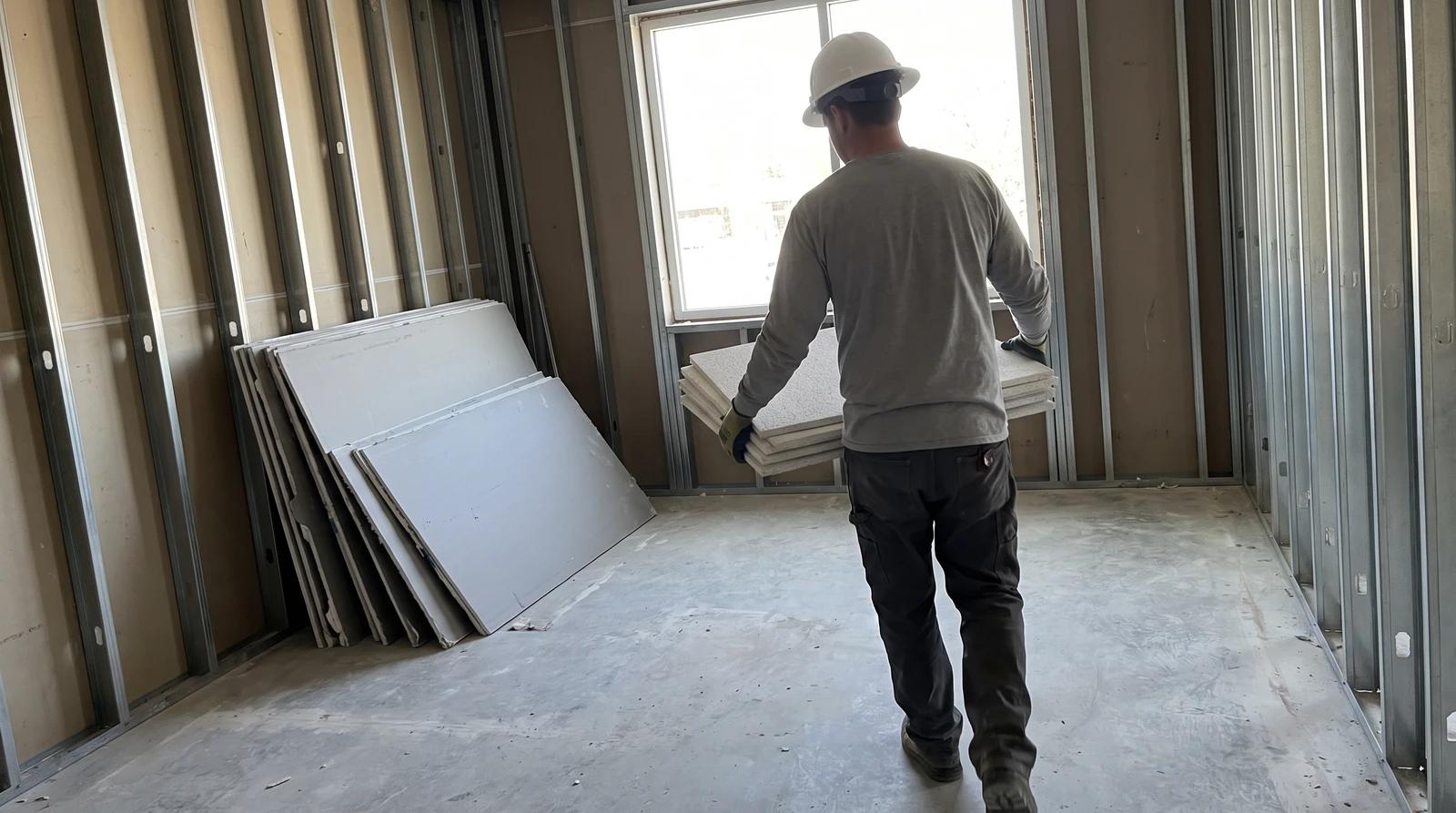
Commercial Demolition Services in Boise for Lease-End Move-Outs
Last spring we walked a dental office on the Ten Mile corridor in Meridian with the owner, lease in hand. He'd highlighted one line in yellow: "Tenant shall return the premises to its original condition." He'd been in that space eleven years and had no idea what "original" meant, which is how a lot of calls about commercial demolition services in Boise start.
Most of those calls aren't about knocking down buildings. They come from business owners whose lease is ending and who have to pull out everything they built before they can hand back the keys.
If that's where you are, here's how it actually goes.
What "return to shell" usually means
So what does "original condition" mean? Usually less than you'd fear, but it depends on your lease, so read it first.
In most of the leases we see, the landlord wants the space back roughly the way you got it. That's called shell, or a "white box" if they want it a bit more finished.
In practice that might mean partition walls you added, private offices, a reception counter, built-in cabinets and shelving. Sometimes it's flooring you put down, a drop ceiling you changed, or plumbing you ran for a break room or exam rooms.
What stays matters just as much. Fire sprinklers, the main electrical panel, HVAC and anything structural almost always stay put.
Tip: Before you call anyone, email your property manager and ask for a written list of what they want removed and what they want left. That short email can keep you from tearing out something the next tenant would've happily used, or losing part of your deposit over something you missed.
Some landlords will walk the space with you and ask you to leave the nice glass conference room because it'll help them lease the unit faster. That's a conversation worth having.
Commercial demolition in Boise starts with the paperwork
This is the part that catches people off guard. Interior demo in a commercial unit isn't the same as pulling a vanity out of your bathroom at home.
In Boise and most Treasure Valley cities, taking out walls, plumbing or electrical in a commercial space usually needs a permit from the city building department. Nampa, Meridian and Caldwell each run their own, and they don't all ask for the same things.
Your landlord will almost certainly want to see that permit too, plus proof of insurance from whoever's doing the work.
Then there's the age of the building. If you're in an older building downtown or out on Fairview, federal and Idaho rules generally call for an asbestos inspection before commercial renovation or demolition.
Old drywall mud, floor tile and ceiling texture are the usual suspects. If something tests positive, a licensed abatement crew handles that part before the regular demo starts.
None of this is meant to scare you. It's just why we tell people not to wait until the last two weeks of their lease.
Timing commercial demolition in Boise around your lease
How long does it take? It depends on the size of the space and how much was built out.
A small retail suite in Eagle with a counter, a couple of walls and some slatwall is often a day or two. A dental or medical office with plumbing in every room and a lot of framed walls takes longer.
What really drives the schedule is everything around the demo. Permits, an asbestos test if you need one, and a landlord who wants the noisy work done after hours so the tenant next door isn't bothered.
Once the estimate's done and the paperwork's sorted, we can usually get you on the calendar within a few days. Still, the honest advice is to start the process 60 to 90 days before your lease ends.
Yes, we'd love your business either way. But a rushed job against a hard move-out date is stressful for everybody, and holdover rent adds up fast.
Season plays a small part too. An empty unit in August with the AC turned down gets hot, and January means hauling debris across icy parking lots. Neither one stops us. It just changes how we plan the day.
What happens to everything you built
People are usually surprised by how much of a build-out never goes in the ground.
Solid cabinets, counters, shelving, doors and light fixtures often get donated. Metal studs, wiring and old ductwork get recycled, and clean wood and cardboard get pulled out too.
What's left goes to the landfill. For jobs in Boise, that usually means a run out to the Ada County site.
We price commercial demo by the space and the work involved, which mostly comes down to how much has to come out and how much hauling that means. You get a free on-site estimate and a firm price before anything's touched.
No surprise charges at the end. Cash, card and Venmo all work.
One more thing to plan for
When the demo's done, there's usually some patching left. Anchor holes in the floor, a scar on the wall where the counter was, capped pipes.
Ask your landlord whether they expect that patched before turnover. Some do, some fix it themselves and take it out of the deposit, and some honestly don't care.
Bottom line
Find out exactly what your landlord wants back, in writing. Get permits and any testing moving early, and give yourself enough runway that you're not paying extra rent while the walls come down.
If you're closing up a space anywhere from Kuna to Caldwell and want to know what you're in for, give us a call at (208) 296-6153. We'll walk it with you, lease in hand, and give you a straight answer.
Planning a Demolition Project?
We handle permits as part of our demolition services throughout Boise, Meridian, Nampa, and the Treasure Valley. Call for a free estimate.
Call (208) 296-6153More From Our Blog
Commercial Demolition Services in Boise Next to Open Tenants
How commercial demolition in Boise works when the neighbors stay open: noise, dust, timing, permits, landlord sign-off and what drives the price.
Deck Demolition Services in Boise: Repair It or Tear It Out?
Soft boards, wobbly railings, popped nails. Here's how to tell if your Boise deck can be repaired or needs to come out, and what deck demolition involves.
Fireplace Demolition Services in Boise: Cost and What to Expect
Tearing out an old brick fireplace in Boise? Here's what fireplace demolition involves, what drives the cost, and what to sort out before we start.
