Kitchen Demolition Services in Boise: What to Save First
You've already decided the kitchen's getting gutted. The cabinets are dated and the counters are tired. Before you book demolition services in Boise, one question is worth a few minutes: does all of it really have to end up in a dumpster?
Usually not. A good share of a kitchen can be saved, donated or recycled. If you sort that out before demo day, the crew knows how to work and what to haul away.
Why the salvage list comes before kitchen demolition
Demo doesn't run at one speed. Tearing out cabinets that are headed for the trash is fast and rough.
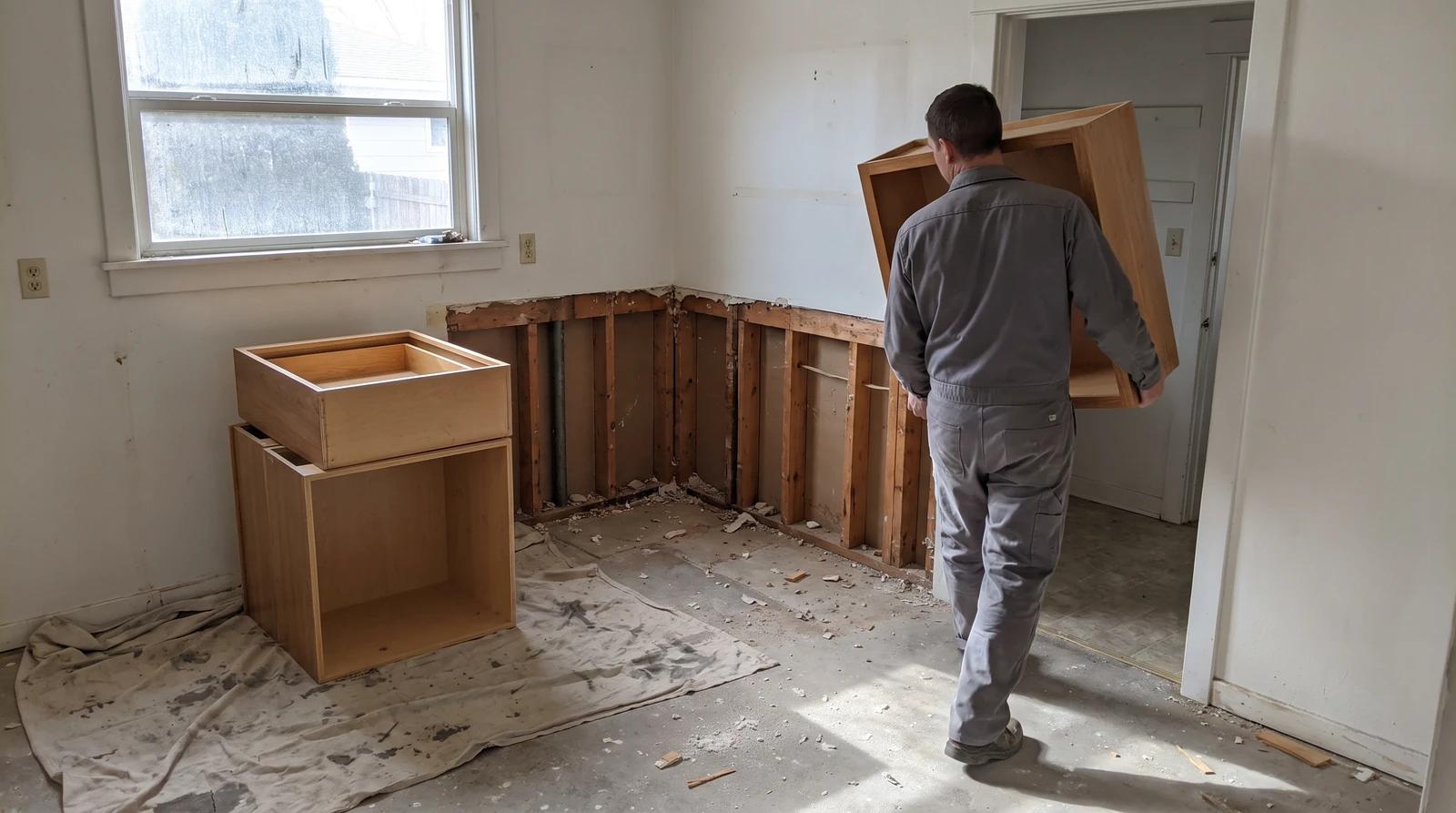
Pulling cabinets someone else will reuse is slower. The screws come out one at a time, the face frames get protected and the boxes leave the house stacked instead of in pieces.
Neither way is wrong. The crew just has to know which one you want before anyone picks up a pry bar. Once a cabinet's been barred off the wall, it's done.
That's why it helps to bring it up during the free on-site estimate. We price by the space and the work involved, and careful removal is different work from a straight tear-out.
Tell us on the walkthrough what you want saved. That way the firm price covers what's actually going to happen.
What's worth saving in a Boise kitchen demolition
Upper cabinets are the easiest win. They're light and have no plumbing in them. Solid wood boxes in decent shape tend to get a second life in a garage, a laundry room or a shop.
Lower cabinets depend on how they were installed. A countertop that was glued down hard or a sink base with water damage makes salvage tough. If they're solid and dry, they're usually worth the extra care.
Working appliances are worth keeping out of the dumpster, because a fridge or range that still runs has value to somebody. Dead ones can usually be recycled for the metal, but anything with refrigerant has to be handled properly first.
Sinks, faucets, light fixtures and cabinet hardware are small, but they add up. If you want to keep them, pull them yourself before demo day or point them out and we'll set them aside.
What about countertops? Laminate rarely comes off in good enough shape to reuse.
Stone can survive, but slabs are heavy and tend to crack at the seams and around the sink cutout. Treat stone as a maybe.
Tip: Put a strip of painter's tape on anything you want saved, and take a photo of it too. A mark on the cabinet itself works better than a note on your phone that nobody else on site can see.
The stuff that usually doesn't survive
A tile backsplash almost never comes off whole. It's set in thinset or mastic and usually takes drywall with it, so plan on that wall needing a patch or new board.
Flooring is similar. Glued-down sheet vinyl and mortared tile are tear-outs, not salvage. Some floating floors can be lifted and reused, but only if they've stayed dry.
Older houses add one more step. Homes in Boise's North End, the older parts of the Bench and the original neighborhoods in Nampa and Caldwell can have flooring, mastic or drywall compound that should be tested for asbestos before anyone disturbs it.
Homes built before 1978 can also have lead paint. Testing first keeps the job safe and legal, and it's a lot better than stopping halfway through.
Where the saved pieces go around the Treasure Valley
Much of what we haul is donated or recycled. Usable cabinets, working appliances and fixtures can go somewhere they'll be reused, and metal can be recycled.
What's left is real waste. From Boise, Meridian, Eagle or Kuna it typically goes to the Ada County landfill, and from Nampa, Caldwell or Middleton it heads to Canyon County's.
Would you rather handle the donations yourself? That works too. Reuse centers and charities each set their own rules, so call ahead and check what they're taking, especially appliances or cabinets with a water stain or a missing door.
Permits, cost and timing for demolition services in Boise
A cosmetic tear-out isn't usually what raises permit questions. Taking out walls or moving plumbing and electrical is.
Boise, Meridian, Eagle and the other cities don't all handle this the same way. If anything structural or utility-related is changing, check with your city's building department before demo starts.
Cost comes down to a trade-off. Saving things takes more labor, and throwing everything out means more goes to disposal.
Most kitchens land somewhere in between. We work that out with you piece by piece on the walkthrough, before you get a price.
Timing depends on the same things. How much is coming out, how easy it is to carry out of the house, how much needs careful removal and whether testing or a permit has to come first all matter.
Remodel season fills up calendars, so it helps to call early. When we have an opening, same-day service is sometimes possible.
Before the cabinets come down
Whoever does the work, decide what you're saving before demo day. People skip that step and wish they hadn't.
Walk the room and decide what stays whole, what gets donated and what's trash. Get older materials tested, and ask about permits if anything structural is changing.
If you want someone to look it over with you, give Boise Demolition a call at (208) 296-6153. The estimate's free, you'll have a firm price before anything is touched and we take cash, card and Venmo.
Planning a Demolition Project?
We handle permits as part of our demolition services throughout Boise, Meridian, Nampa, and the Treasure Valley. Call for a free estimate.
Call (208) 296-6153More From Our Blog
Bathroom Demo in Boise: Demolition Services for Tile and Tubs
What bathroom demo in Boise really involves: mortar-set tile, cast iron tubs, hidden water damage and older materials, and what moves the cost and the timing.
Interior Demolition Services in Boise: How Long It Takes
How long does interior demolition take in Boise? What sets the timeline for bathrooms, kitchens and full guts, plus what slows demo down and how to plan around it.
Hot Tub Demolition Services in Boise: Whole or Cut Apart?
Getting rid of an old hot tub in Boise? Here's how our demolition crew decides whether it leaves in one piece or in sections, and what you should do first.
