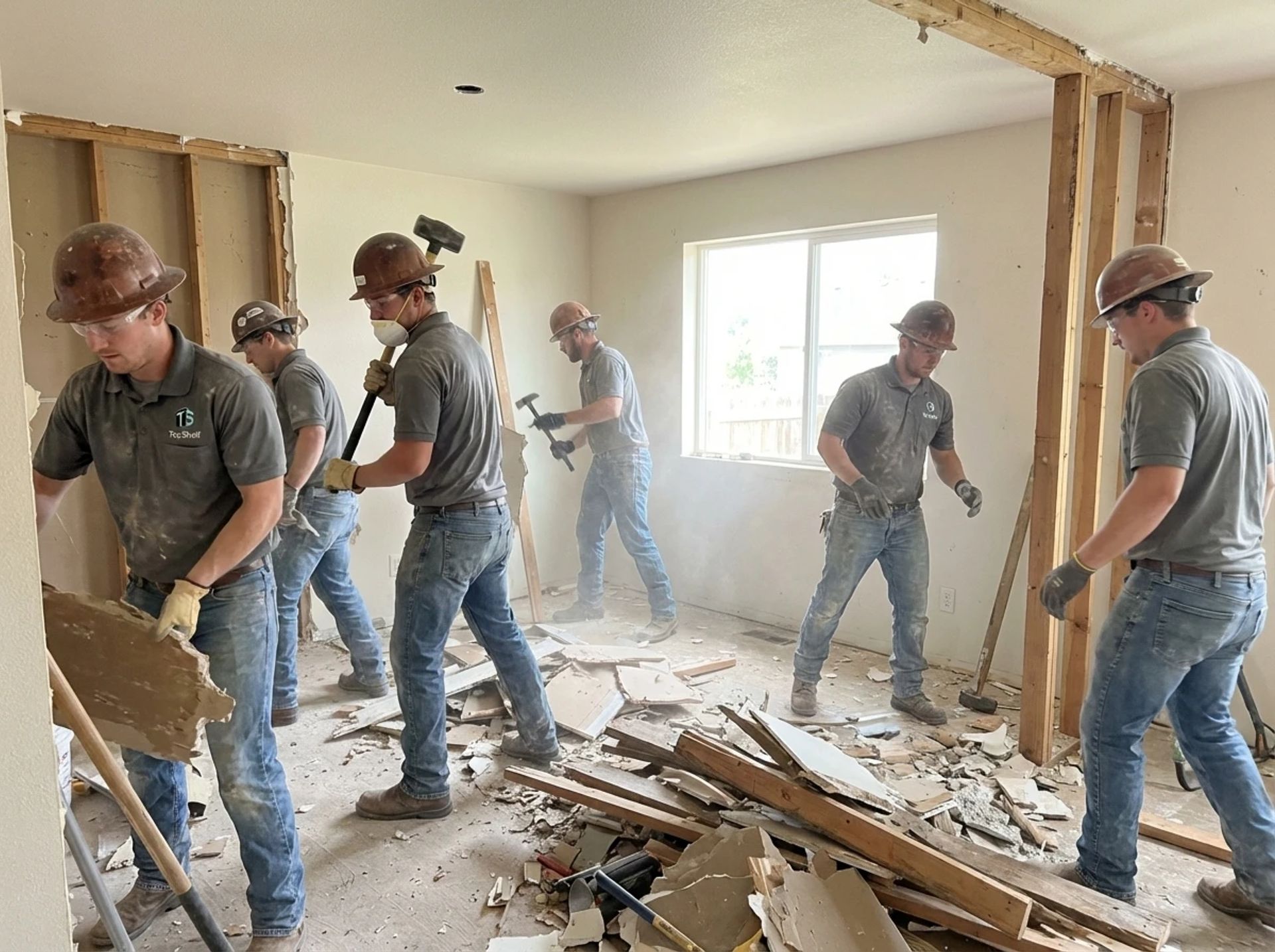
Demolition Safety: What Homeowners Should Know
Demolition looks straightforward until something goes wrong. Walls don't always fall where you expect. Dust contains things you shouldn't breathe. Structures can shift unexpectedly.
Professional demolition crews deal with these risks daily. They know what to look for and how to manage it. But as a homeowner hiring a demolition service, you should understand the safety considerations involved.
Here's what we think about when approaching any demolition project in the Boise area.
Hidden Hazards in Older Boise Homes
The Treasure Valley has homes from every era, and older buildings come with hazards you can't always see:
Asbestos. Common in homes built before 1985, asbestos was used in insulation, floor tiles, roofing, siding, and more. Disturbing asbestos-containing materials releases fibers that cause serious lung disease. Idaho requires testing before demolition of pre-1985 structures.
Lead paint. Any home built before 1978 likely contains lead paint. Demolition creates lead dust that can contaminate the area and pose health risks, especially for children.
Old wiring. Knob-and-tube wiring, aluminum wiring, and other old electrical systems can be live even when you think power is off. Improper handling causes fires and electrocution.
Gas lines. Old gas lines may still be pressurized even after you think they're disconnected. Hitting a gas line during demolition can cause explosions.
Structural Risks During Demolition
Buildings don't always come apart predictably:
Partial collapses. Removing one section can cause other sections to fall unexpectedly. Professional demolition involves understanding load paths and sequencing the work safely.
Hidden rot or damage. Structures that look solid may have hidden water damage, termite damage, or rot that makes them unstable. We've seen floors collapse and walls give way without warning because of unseen damage.
Heavy materials. Concrete, brick, and lumber are heavy. Improperly supported debris can shift and fall. Workers need to know how to work around and with heavy materials safely.
Adjacent structures. Partial demolition near remaining structures requires care to avoid damaging what's staying. This is especially important in attached homes or when removing additions.
How Professional Crews Handle Safety
Here's what a safety-conscious demolition process looks like:
None of this is optional. It's how professionals work without getting hurt or causing damage.
Why DIY Demolition Can Be Dangerous
We occasionally get calls from homeowners who started a demolition project and realized they were in over their heads. Here's what usually goes wrong:
Underestimating the work. Knocking down a wall looks easy on TV. In reality, it's heavy, dusty, dangerous work that generates far more debris than people expect.
Not knowing what's in the wall. Electrical wires, plumbing, HVAC ducts, and structural supports often run through walls. Hitting live wires or water lines mid-demolition creates serious problems.
No respiratory protection. Demolition dust contains all sorts of things you shouldn't breathe. Standard dust masks aren't adequate for many situations.
Improper tool use. Sledgehammers, reciprocating saws, and other demo tools cause serious injuries when used improperly. We see a lot of hand and arm injuries from people who rented tools without proper training.
No disposal plan. People tear things apart and then realize they have nowhere to put the debris. It sits in their yard or garage while they figure it out.
What to Expect During Professional Demolition
When we're working on your property, here's what you can expect:
Noise. Demolition is loud. If we're working near neighbors, we'll typically notify them in advance and stick to reasonable hours.
Dust. We control dust as much as possible, but some is inevitable. We may wet materials to reduce dust, and we take precautions to prevent dust from entering areas that should stay clean.
Debris. There will be a lot of it. We handle loading and hauling as part of the job—you shouldn't have piles sitting around.
Stay clear of the work area. For your safety, we'll establish work zones where you shouldn't enter during demolition. This isn't being territorial—it's keeping you safe.
Communication. We'll let you know what's happening, what to expect, and when the work will be complete. No surprises.
The Bottom Line
Demolition involves real risks that professionals manage through training, experience, and proper procedures.
When you hire a demolition contractor, ask about their safety practices. Do they have insurance? Do they do hazardous material testing? How do they handle dust and debris? A legitimate contractor will have clear answers.
The goal is to get your demolition project done without anyone getting hurt and without creating problems for your property. That takes more than just swinging a sledgehammer.
Need Safe, Professional Demolition?
We handle demolition projects throughout Boise, Meridian, Nampa, and the Treasure Valley with proper safety protocols. Call for a free estimate.
Call (208) 296-6153