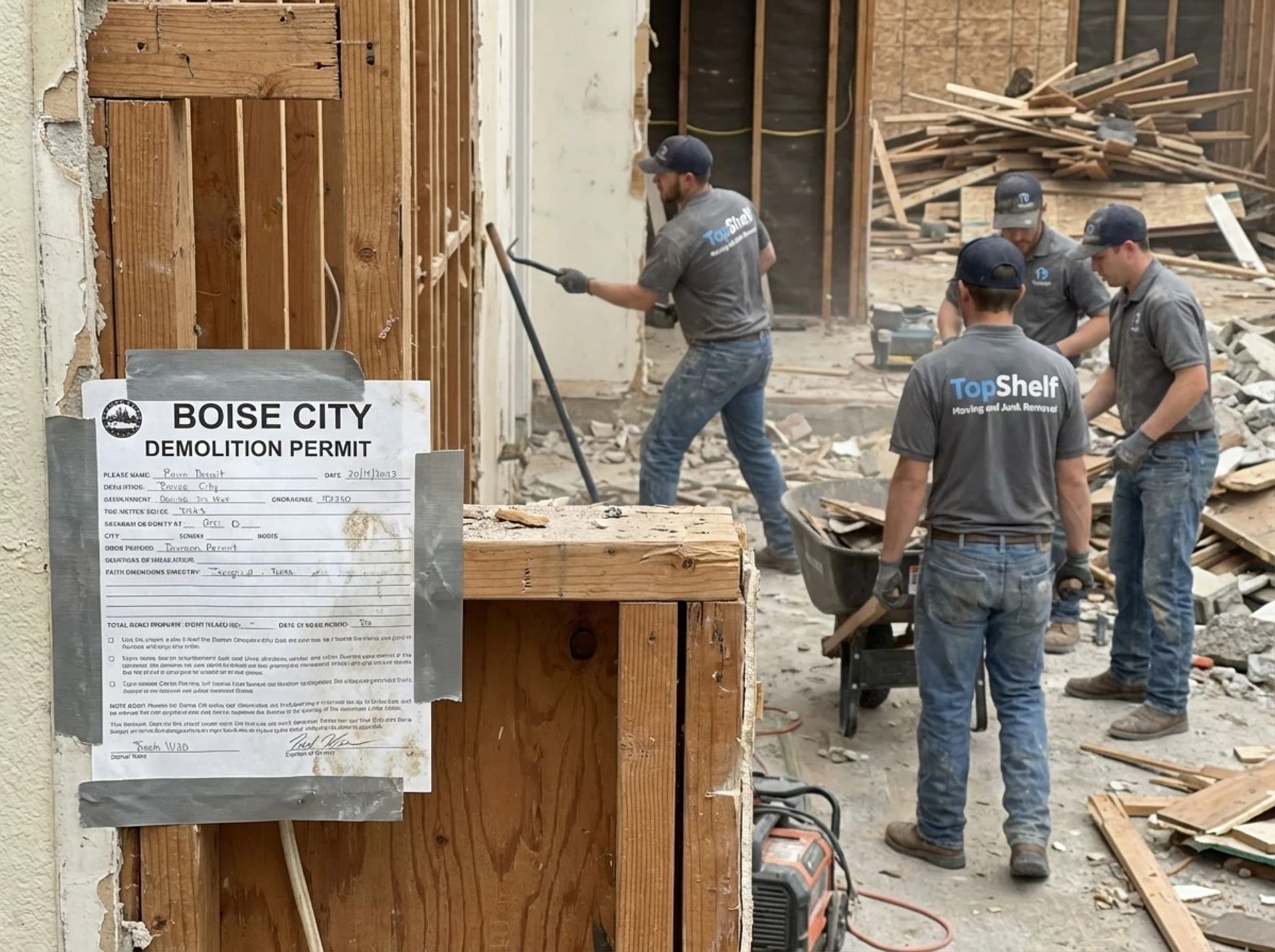
Do You Need a Demolition Permit in Boise?
Quick answer: for most demolition work in Boise and Ada County, yes, you need a permit. But there are exceptions.
The permit question trips up a lot of property owners. Some assume they can just tear something down on their own property. Others are told different things by different contractors. Let me clear it up.
Here's what the City of Boise and surrounding Treasure Valley jurisdictions actually require.
When You Need a Demolition Permit
In the City of Boise, you generally need a demolition permit for:
Complete building demolition. Tearing down any structure—house, garage, commercial building, shed over a certain size—requires a permit.
Partial structural demolition. Removing walls, roofs, or other structural elements as part of a renovation often requires permits, especially if they're load-bearing.
Connected utility work. If the demolition involves disconnecting electrical, gas, water, or sewer services, permits and utility coordination are required.
Work in historic districts. Properties in Boise's historic districts have additional requirements and may need Historic Preservation Commission review.
When You Might Not Need a Permit
Some smaller demolition projects may not require permits in Boise, though this varies by jurisdiction:
Small accessory structures. Sheds under a certain square footage (typically 120 sq ft) may be exempt. But check with the city—rules vary.
Interior non-structural demolition. Removing cabinets, fixtures, flooring, or non-load-bearing walls during a remodel may not require a separate demolition permit, though the overall remodel might need permits.
Fence removal. Taking down a fence typically doesn't require a permit.
Important caveat: Just because you might not need a demolition permit doesn't mean you can skip other requirements. Utility disconnections, asbestos testing, and proper debris disposal still apply.
The Boise Demolition Permit Process
Getting a demolition permit in Boise involves several steps:
Step 1: Application. Submit an application to the City of Boise Planning and Development Services. This includes property information, scope of demolition, and contractor details.
Step 2: Asbestos inspection. For buildings built before 1985, you typically need an asbestos inspection before demolition can proceed. This is an Idaho DEQ requirement.
Step 3: Utility disconnections. Schedule disconnections with Idaho Power, Intermountain Gas, and city water/sewer. These must be completed and documented before demolition.
Step 4: Permit issuance. Once requirements are met and fees are paid, the permit is issued.
Step 5: Final inspection. After demolition, a final inspection verifies the work was completed properly and the site is safe.
Permit Costs and Timeline
Here's what to expect for Boise demolition permits:
Plan for the permit process to add 2-4 weeks to your project timeline. Rushing or skipping permits can result in much longer delays—and fines.
Different Rules in Different Areas
The Treasure Valley includes multiple jurisdictions, each with slightly different requirements:
Meridian has its own permitting process through the Community Development Department. Generally similar requirements to Boise, but different forms and fees.
Nampa and Caldwell each have their own building departments with specific demolition permit requirements.
Ada County (unincorporated areas) processes permits through the county Development Services department.
Canyon County has separate requirements for properties outside city limits.
What Happens If You Skip the Permit?
Some property owners think they can just demo something and deal with it later. Here's why that's a bad idea:
Stop-work orders. If the city discovers unpermitted demolition in progress, they can halt work until permits are obtained—often with additional fees.
Fines. Penalties for unpermitted work can range from hundreds to thousands of dollars.
Title issues. Unpermitted demolition can create problems when you try to sell the property. Buyers and title companies will discover the unpermitted work.
Insurance problems. If something goes wrong during unpermitted work, your insurance may not cover damages or injuries.
Future building permits. Want to build something new on the site? Good luck getting permits when records show unpermitted demolition occurred there.
The Bottom Line
For most demolition work in Boise and the Treasure Valley, you need a permit. The process isn't complicated, but it does take time and proper planning.
A reputable demolition contractor handles permit coordination as part of the job. We know the requirements, have relationships with the permitting offices, and can usually expedite the process.
Not sure whether your specific project needs a permit? Call the City of Boise Planning and Development Services at (208) 384-3830, or give us a call. We can help you figure out what's required for your situation.
Planning a Demolition Project?
We handle permits as part of our demolition services throughout Boise, Meridian, Nampa, and the Treasure Valley. Call for a free estimate.
Call (208) 296-6153